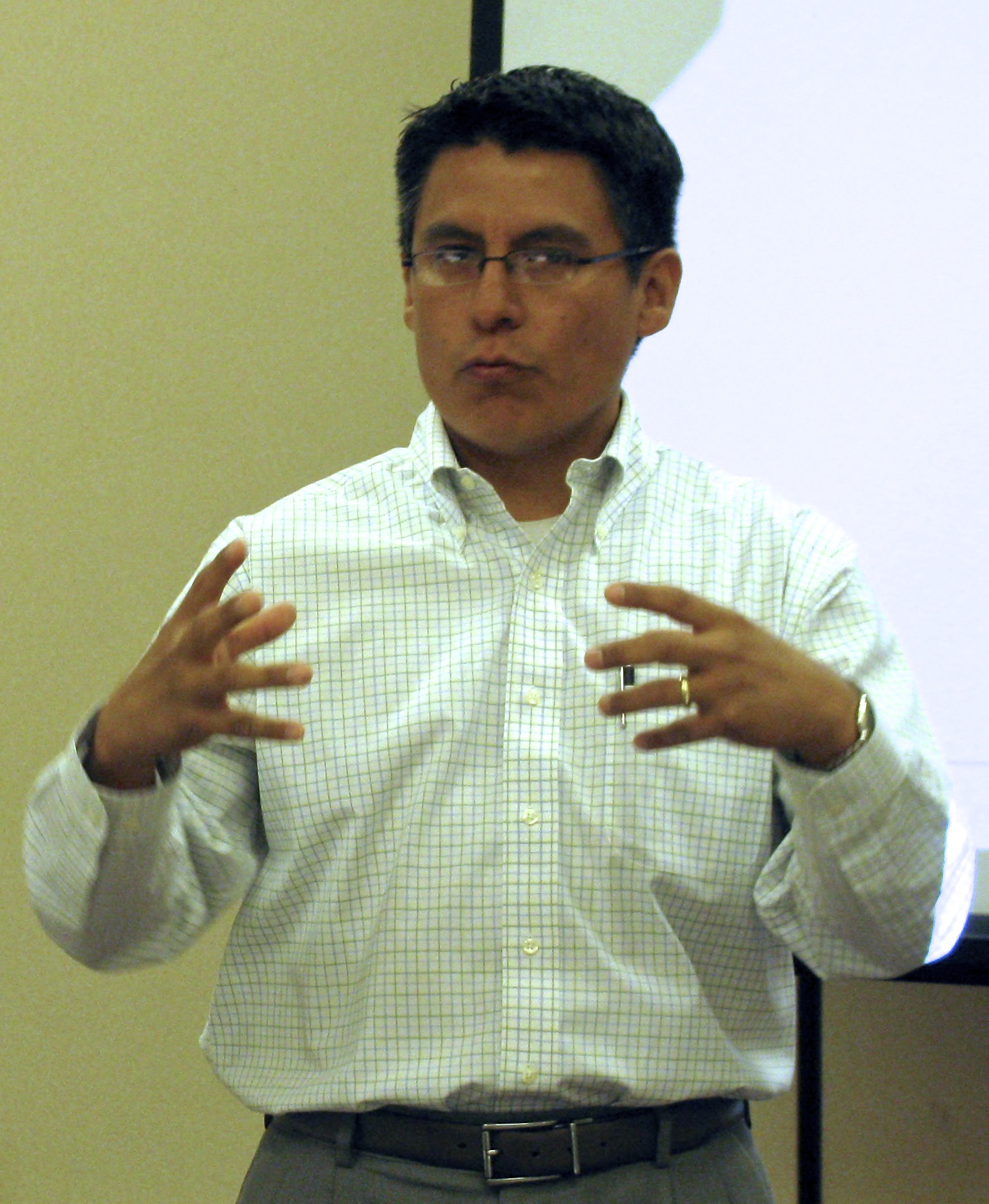
 I do a lot of group facilitation, day long or multi-day sessions with people with big titles in the room trying to do the seemingly impossible (really!). After a string of such engagements I’ve been reflecting on a few confessions I’ve never shared. I hope to hear from other professional facilitators about your experience and why not, your own confessions. I also hope to help those just getting started in the field and practice of facilitation which is so enriching, professionally satisfying, and sorely needed in most organizations. So, just between us, here are a few of my confessions…
The SmartChange™ Blog

Why Are They Staring At Me Like That?
 Once, working with a group of subject matter experts (SMEs), I asked a very straightforward question: “How can we improve customer service?” They stared at me like I had just spoken a foreign language! The problem is that often, the typical open-ended, logical, straightforward question does not result in the robust, focused, productive dialogue we want. For better results, try asking a facilitative question.
Share this page

7 Sure Ways to More Effective Meetings

Image by Ambro
The USA article “Tame the meeting beast with these 8 tips” sheds light on something most of us already know: much of our time spent in meetings is a waste of time!
When you consider that we spend a great part of our time in meetings (what else is a work day but an endless series of meetings?), 50% waste is a huge misuse of organizational resources!!
Share this page

Three Proven Strategies for Successful Group Dialogue
 |
| Image by David Castillo Dominici |
I recently contributed this article to Leadership Strategies, based on a previous post on The Role of the Six Sigma Black Belt as a Facilitator. This version is for a broader audience and explores three proven strategies for successfully facilitating productive group dialogue.
In the world of continuous and process improvement, practitioners range from quality engineers, to lean specialists, to six sigma black belts (and green belts), to a variety of other titles and labels. They all share certain things in common:
Share this page

Facilitation as a Key Intervention for Organizational Change
As I prepare to attend the International Association of Facilitators Conference in Denver (one of my favorite professional conferences!) I remember presenting at this same conference (but in Europe a couple of years ago) on the topic of Facilitation as a Key Intervention for Organizational Change.
So, I wanted to share a couple of thoughts on how group facilitation or dialogue facilitation is a key intervention for bringing about organizational change. One of the great business thinkers, Peter Block, said…”Change happens in the dialogue of the ‘why’ questions…looking for the meaning of things.”
Share this page

The Role of the Six Sigma Black Belt Part V: The Facilitator
This is part of the series The Role of the Six Sigma Black Belt. The concepts and ideas presented also apply to other improvement professionals and leaders implementing improvements in an organization.
The Facilitator Role
To illustrate this role picture this. I was with a team of IT programmers to develop a SIPOC (a tool that identifies the inputs, outputs, suppliers, and customers for each step of a process) of the testing process for new software. So, I asked a very straight forward and logical question…”what are the process steps for testing new software?”
I was surprised when the group seemed stumped. It’s not that they didn’t know the answer. They were subject matter experts. They knew how to test software. So I asked the same question again. Twice. With the same response…none!