 Once, working with a group of subject matter experts (SMEs), I asked a very straightforward question: “How can we improve customer service?” They stared at me like I had just spoken a foreign language! The problem is that often, the typical open-ended, logical, straightforward question does not result in the robust, focused, productive dialogue we want. For better results, try asking a facilitative question.
The SmartChange™ Blog

Others Have Failed, But You Don’t Have To!
 Consider this…
- Change is constant
- The pace of change will increase
- Most change initiatives in organizations fail
For decades now, studies have shown that as many as 85% of all change initiatives fail. This is true in new technology implementation, organizational restructuring, mergers, business transformations, outsourcing, process improvement programs, or other types of change. Why?
Share this page

Love at the Office? …Why Not?
 Probably the only time you hear people using the word LOVE is to describe something they really like, such as “oh I love your shoes, they are so cute!” or “I love my new car” or “I love to ride my bike in the mornings.” We seldom use the word LOVE to describe how we feel about someone, unless it is a workplace romance – but that is not what this post is about.
Share this page

Why a Get-down-to-Business Approach Isn’t’ Enough?
 Have you seen this…
A chief executive flies in to have a skip-level meeting with the troops. Naturally he wants them to feel free to open up to him and share things that would help him be a better leader. The time is limited, and of course in addition to ‘hearing them out’ he also has a handful of slides he wants to share with them – his vision, the strategy, the top priorities, and how employees can contribute. All good information, all well-intended. So, looking at the clock, he gets down to business! After he leaves, comes the meeting-after-the-meeting with your colleagues and you realize that nobody felt totally comfortable speaking their minds with the boss.
Share this page

Experiencing Change? Bon Voyage

One of our trips along the East Coast states.
We enjoy traveling as a family and have driven thousands of miles from Michigan through much of the United States and as far as Acapulco, Mexico! While traveling long distances isn’t easy or always pleasant, in the end every journey is an adventure we all enjoy and remember with fondness. Our children have become accustomed to long road trips and look forward to each new adventure. Everyone helps with the planning and preparation. We all accept the fact that we will be driving for a long time in a car with some inconvenience but that the expected outcome offsets the hassles common to long road trips (which are many!).
But for a long journey to be successful and enjoyable, we have to have 1) a good reason to travel, 2) a destination everyone wants to go to, and 3) a good plan to get there.
Share this page

Why Culture Matters: Three Things Any Leader Can Do About It
 In an interesting article by the Washington Post (What you can learn from Southwest Airlines’ culture) Micah Solomon addresses lessons about organizational culture and why culture matters. The article illustrates these lessons using Southwest Airlines as an example. To summarize, culture matters because…
- Culture creates a consistently positive customer experience
- The impact of culture is amplified by social media
- A strong culture helps organizations manage constant change
Share this page

So, Everybody Embraces Change?
Once, I was invited to present at a Leadership Development Program hosted by a major university for a large corporation (my topic was organizational change). The host facilitator of this program got the group started in the morning by asking participants to take a few minutes to introduce each other at their table and make a list on a flip chart of the assets they brought to the organization.
I listened with interest and curiosity to each table report out. Without exception, each of the eight groups reported that one of the assets they brought to their organization was being ‘agents of change’ or ’embracing change’ or some form of that. This was interesting because at the time I was working with this organization and the reports were that ‘change’ was something this organization struggled with. I was there, to speak on the topic!
Share this page

Leadership and Change: Blame, Fallacy, and Culture Change
 A recent article (A Call for Leadership) in the Harvard Nieman Journalism Lab points to leaders as the chief reason that corporate culture does not change. The article cites research and examples to make the case for why executives are to blame for failure to change corporate culture in news organizations. But, this is true of probably any organization!
The typical view of most executives in organizations is that the masses will ‘resist’ change and that the masses is where the problem is. That is a fallacy. As the article points out and in my experience, it is leadership where the blame lies. Why? Because 1) often the change leaders are not truly willing to change, and 2) it is at the mid-management layer where the change most often loses steam (not the masses). Not surprisingly, the most common reason for mid-level leaders not supporting the change is top level leaders not being willing to change!
Share this page

3 Ways to Make Your Change Management Plan Have Real Impact
This is the fourth post in the series “5 Reasons Why a Change Management Strategy Matters“
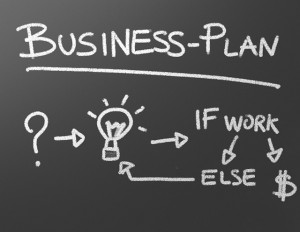
Change management can be a buzzword. The concept of change management is often not well understood. Consequently, some change management plans can be complicated, hard to understand, and difficult to measure. Other plans may be nothing else than a change communications plan. Neither case yields effective results. But it does not have to be that way! Here are three ways to make your change management plan have a real impact on your project implementation.
Share this page

7 Sure Ways to More Effective Meetings

Image by Ambro
The USA article “Tame the meeting beast with these 8 tips” sheds light on something most of us already know: much of our time spent in meetings is a waste of time!
When you consider that we spend a great part of our time in meetings (what else is a work day but an endless series of meetings?), 50% waste is a huge misuse of organizational resources!!
